
High-Tech Meets Rehabilitation: How Virtual Reality and AI Are Revolutionising Mobility Recovery
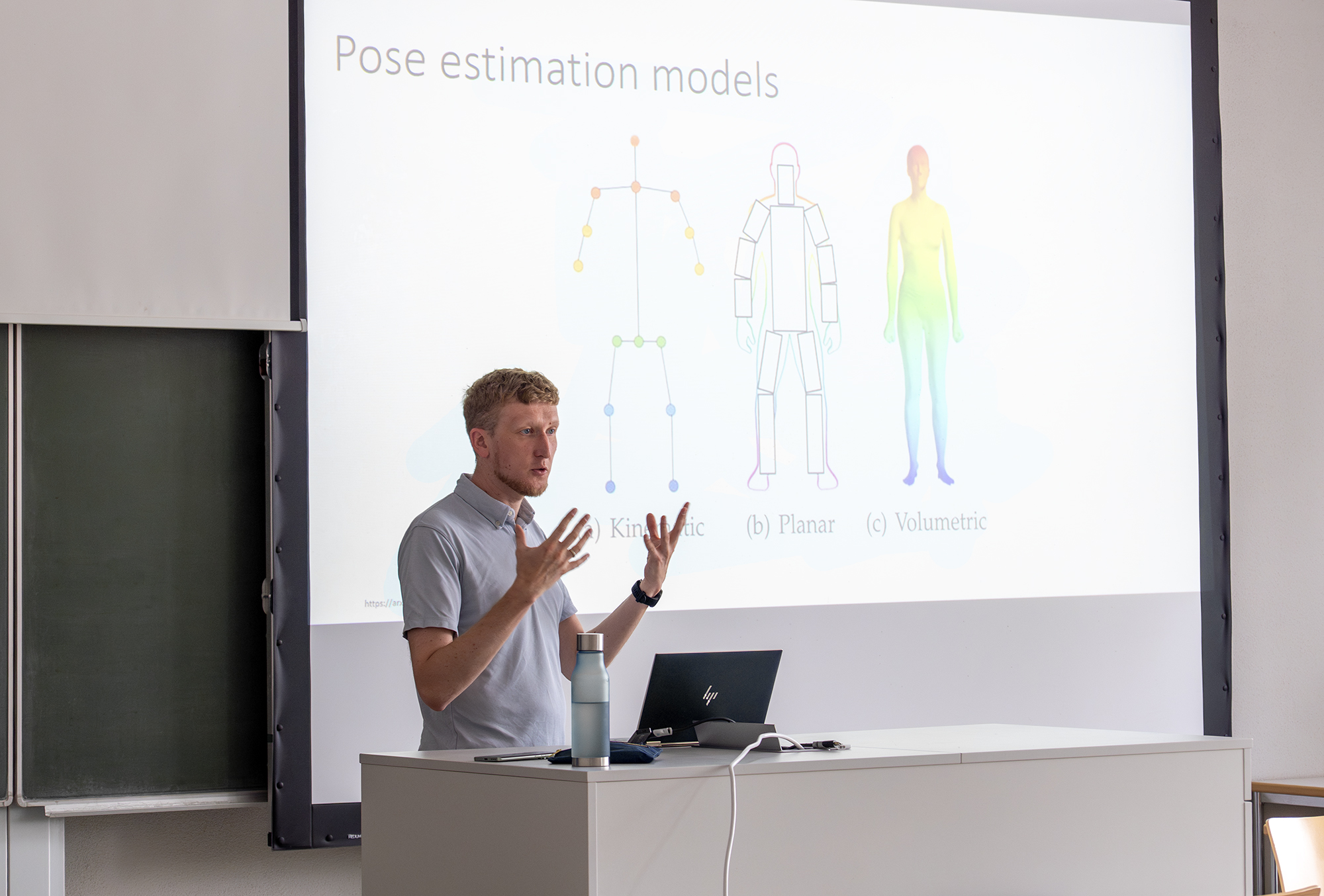
The central question of the presentation was: How can movement data be captured with such precision and simultaneity that it becomes practical for everyday use—delivering real value both in clinical settings and at home?
From Clinic to Everyday Life: Two Approaches, One Goal
Dr. Abromavičius showcased his research on 3D posture recognition and human pose analysis, aimed at improving the accuracy of skeleton tracking through synchronised video streams and intelligent algorithms.
His work is structured into two complementary components:
- High-resolution motion capture using a multi-camera setup in clinical environments.
- An app-based solution that utilizes standard selfie cameras—requiring no calibration or specialized hardware. This enables patients to document their rehabilitation progress from home. A particularly innovative aspect is the depersonalised feedback, which ensures privacy while still providing meaningful insights.
Technology with a Human Focus
What sets this project apart is its successful fusion of technological innovation with a deep understanding of the needs of rehabilitation patients. The approach not only enhances clinical precision but also empowers patients in their everyday lives—bridging the gap between hospital-based care and home-based recovery.
Please find more information about the Department of Computer Science at Trier University of Applied Sciences here.